TikTok Shop Alternatives: 7 Places to Sell Without TikTok (2026)
The best TikTok Shop alternatives for 2026 — where to sell products if TikTok gets banned or you want to diversify beyond TikTok Shop.
FlowShorts Team
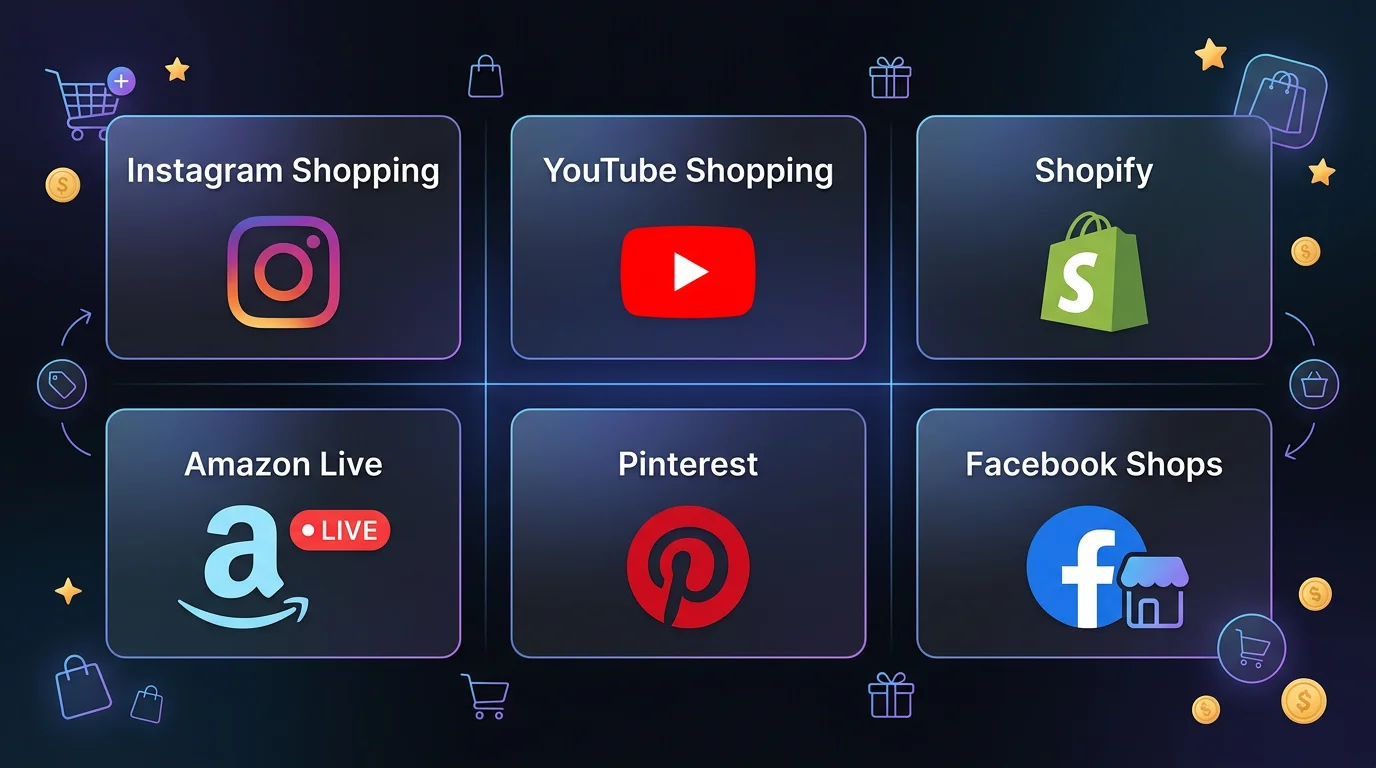
If you're selling on TikTok Shop — or thinking about it — you already know the risk. The ongoing TikTok ban uncertainty in the US has left thousands of sellers scrambling for a TikTok Shop alternative that doesn't depend on a platform that could vanish overnight. Even without a ban, sellers are hitting real friction: commission fees that eat into margins, sudden account suspensions, and an algorithm that rewards chaos over consistency. The good news is that social commerce has exploded across every major platform, and there are now seven strong alternatives where you can build a sustainable product business — without betting everything on TikTok.
This guide covers the seven best TikTok Shop alternatives in 2026, how their fees and features stack up, and — critically — how to drive traffic to any of them using short-form video content.
Key Takeaways
- TikTok Shop charges commissions of 2–8% per sale, and sellers face real ban and account-suspension risk — diversifying now is smart, not reactive.
- Instagram Shopping and YouTube Shopping are the closest like-for-like replacements: both are video-native and integrate directly with short-form content.
- Shopify gives you full ownership of your store, customer data, and brand — the best long-term play for serious sellers.
- Short-form video remains the single best traffic driver for any social commerce platform. Tools like FlowShorts let you auto-post product videos to YouTube Shorts, Instagram Reels, and TikTok simultaneously — so you can build presence everywhere at once.
Why Consider a TikTok Shop Alternative?
TikTok Shop launched in the US in late 2023 and grew fast — GMV exceeded $100 billion globally in 2024. But that growth has come with three persistent problems that are pushing serious sellers toward alternatives.
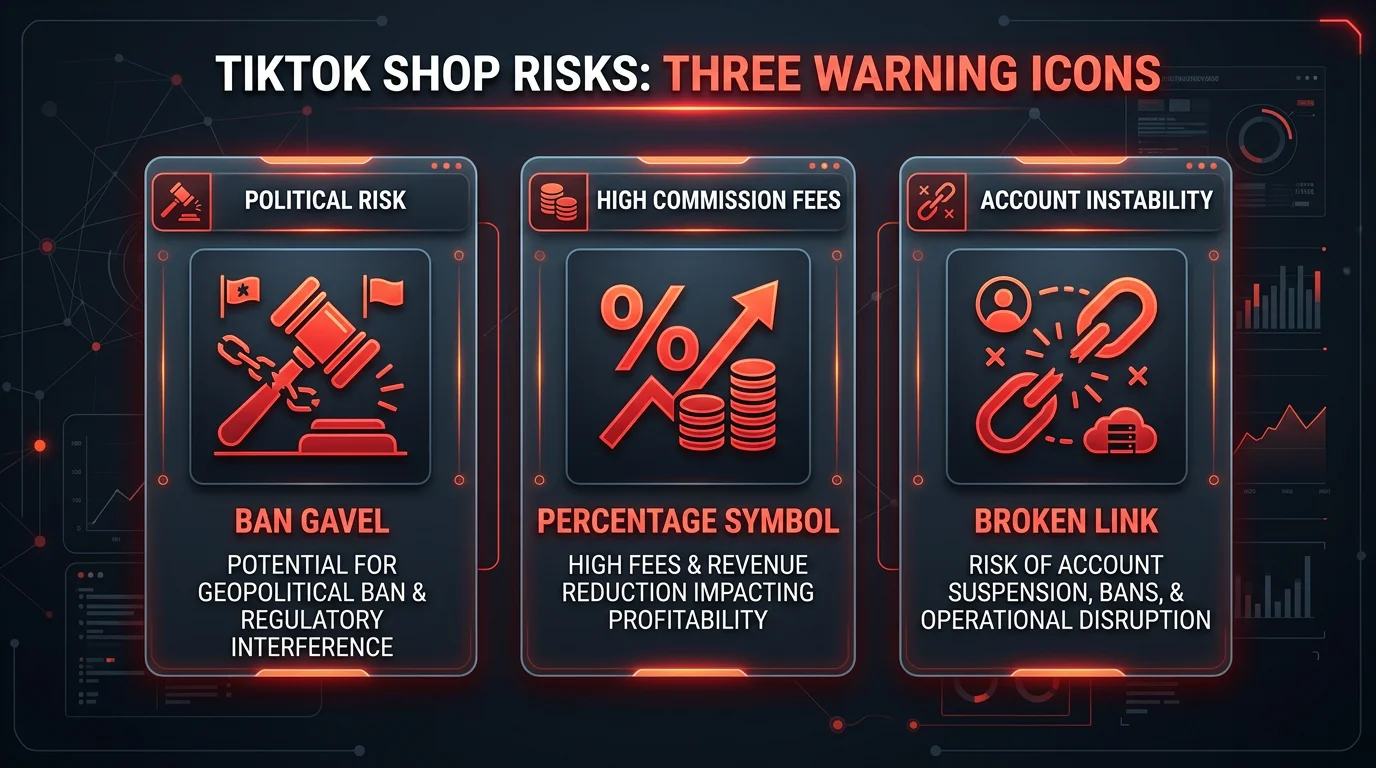
1. Ban and Platform Risk
The US government's push to force a sale or ban of TikTok has created an environment of genuine uncertainty. Multiple deadline extensions and court battles have kept the platform alive, but sellers who built their entire business on TikTok Shop have experienced sudden disruptions — including periods where the app was inaccessible entirely. If you're generating significant revenue through TikTok Shop, that concentration of risk is a business liability. Diversification isn't just about growth; it's about survival.
2. Commission Fees of 2–8%
TikTok Shop charges sellers a referral fee that ranges from 2% to 8% depending on your product category. Electronics and accessories sit closer to 2%, while fashion and lifestyle categories can hit 6–8%. For sellers running on thin margins — particularly those dropshipping or working with manufacturer minimums — this fee structure can eliminate profitability entirely. By comparison, setting up your own Shopify store carries transaction fees of 0.5–2% (depending on plan and payment processor), and platforms like Etsy charge a flat 6.5% referral fee with more predictable terms.
3. Account Instability
TikTok's enforcement policies are notoriously inconsistent. Sellers report having accounts suspended for policy violations that weren't clearly communicated, products removed without warning, and shop access restricted during peak selling periods. Unlike owning your own storefront, selling through TikTok Shop means operating on a landlord's terms — and that landlord can lock you out at any time. This is especially painful if you've invested in building a follower base specifically to drive Shop conversions.
7 Best TikTok Shop Alternatives in 2026
These seven platforms represent the strongest options for sellers looking to move beyond — or diversify away from — TikTok Shop. They're ranked roughly by how close they replicate the TikTok Shop experience, then by platform strength for long-term sellers.
#1 Instagram Shopping
Instagram Shopping is the most direct TikTok Shop replacement for sellers who already understand social commerce. You can tag products directly in Reels, Stories, and feed posts — meaning viewers can go from watching a product demo to checking out without ever leaving the app. Instagram Shops support a full storefront experience: product catalogs, collections, and a dedicated Shop tab on your profile.
The platform's strength is its visual-first format and the sheer size of its purchase-intent audience. Instagram users skew slightly older than TikTok's core demographic (25–44 is Instagram's biggest buying cohort), which can actually be an advantage for higher-ticket products. Meta's ad infrastructure also means you can layer paid promotion on top of organic Reels reach far more easily than on TikTok.
Best for: Fashion, beauty, home goods, lifestyle products. Any category where aesthetics drive purchase decisions.
Fees: No selling fees for in-app checkout (Meta removed the 5% transaction fee in 2023). Standard payment processing applies (~2.9% + $0.30).
#2 YouTube Shopping
YouTube Shopping launched its full product tagging feature for Shorts in 2023, and by 2026 it has matured into a genuinely powerful alternative to TikTok Shop. Creators and sellers can tag products directly in YouTube Shorts and long-form videos, with a shopping shelf that appears below the video. When a viewer taps a product, they can purchase without leaving YouTube.
The massive advantage YouTube has over every other platform on this list is durable discovery. A TikTok or Instagram Reel typically gets 90% of its views in the first 48–72 hours. A YouTube Short or video can rank in search and continue driving traffic — and sales — for months or years. For sellers building long-term product brands, this compounding effect is enormously valuable. YouTube's audience of over 2.7 billion monthly users also dwarfs TikTok's ~1.5 billion.
Best for: Tech, software, educational products, anything that benefits from demonstration or tutorial content. Also excellent for evergreen product categories.
Looking for the Best Faceless Video Tool?
See why creators are switching to FlowShorts — AI video generation + auto-posting to 3 platforms from $19/mo.
Compare Plans →Fees: No platform selling fee. Standard payment processing applies through your connected Shopify or merchant account.
#3 Shopify
Shopify isn't a social commerce platform — it's the foundation of your own brand. And that's exactly why it belongs at number three on this list. Every other platform on this list is a landlord situation: you're selling in their marketplace, by their rules, and they can change the terms at any time. Shopify gives you your own store, your own customer data, your own email list, and your own brand equity.
The practical reality in 2026 is that Shopify integrates with every major social platform — Instagram, YouTube, Pinterest, Facebook, and TikTok. You can run a Shopify store as your primary storefront and use social commerce features across all platforms to drive traffic back to it. Shopify's native analytics, abandoned cart recovery, email marketing tools, and app ecosystem (over 8,000 apps) make it the most complete commerce solution available.
Best for: Any seller serious about building a long-term brand. Essential if you're doing more than $5,000/month in revenue and want to own your customer relationships.
Fees: Plans from $39/mo (Basic) to $399/mo (Advanced). Transaction fees 0.5–2% if not using Shopify Payments. Standard payment processing on top.
#4 Amazon Live
Amazon Live brings live shopping to the world's largest e-commerce platform. Sellers and influencers can broadcast live product demonstrations directly on Amazon, with shoppable product carousels that appear alongside the stream. Viewers can add items to their cart and purchase — often within seconds of seeing a demonstration — without leaving the Amazon ecosystem.
The key advantage is Prime. Amazon's Prime subscriber base (over 200 million globally) has a buying habit that no other platform can match. These are people who have already entered their credit card, set up one-click purchasing, and are accustomed to buying. The conversion rates on Amazon Live are consistently higher than comparable social commerce formats because the purchase friction is so low.
Best for: Sellers who are already on Amazon FBA or Seller Central. Physical products across most categories. Particularly strong for kitchen, fitness, electronics, and beauty.
Fees: Standard Amazon referral fees (6–17% depending on category). No additional fee for using Amazon Live itself.
#5 Pinterest Shopping
Pinterest is chronically underestimated as a commerce platform, and that underestimation is your opportunity. Pinterest Shopping lets you upload product catalogs and have your products appear as shoppable pins across the platform. Users on Pinterest have exceptionally high purchase intent — 83% of weekly Pinterest users say they've made a purchase based on content they saw on the platform, compared to 54% on TikTok.
The discovery model is completely different from TikTok: Pinterest is search-driven and evergreen. A well-optimized product pin can surface in searches months or years after it was posted. For sellers in home decor, fashion, food and beverage, weddings, fitness, and DIY categories, Pinterest's audience demographics (predominantly 25–54, with above-average household income) are exceptionally well-matched.
Best for: Home decor, fashion, food and beverage, wedding-adjacent products, crafts, fitness. Anything visual and aspirational.
Fees: No platform selling fee. You link to your own website or Shopify store for checkout. Standard payment processing applies.
#6 Facebook Shops
Facebook Shops gives you a fully featured storefront within Facebook, with native checkout (in supported countries) or the option to link out to your website. Products can be tagged in Facebook Reels, Stories, posts, and Marketplace listings. Facebook's advertising platform — the most powerful and granular in social media — means you can target product ads with precision that TikTok's ad platform hasn't matched.
Facebook's demographic strength is different from Instagram's: the platform skews toward 35–65, making it the strongest social commerce option for products targeting older buyers. Think health supplements, home improvement tools, insurance-adjacent products, gardening, and anything marketed to parents or grandparents. The audience is enormous — 3 billion monthly active users — and despite younger users migrating to other platforms, Facebook's core users remain highly active buyers.
Best for: Products targeting 35–65 demographic. Any seller already running Facebook ads. Categories like home improvement, health, parenting, personal finance tools.
Fees: No selling fee for in-app checkout (removed in 2023). Standard payment processing applies.
#7 Etsy
Etsy doesn't have video-native shopping features, but it earns a place on this list because of the quality of its buyer intent. Etsy's 90+ million active buyers are specifically looking for handmade, vintage, personalized, and unique products — and they're willing to pay a premium for them. If you sell anything in these categories on TikTok Shop, Etsy's marketplace could be a far more efficient channel.
Looking for the Best Faceless Video Tool?
See why creators are switching to FlowShorts — AI video generation + auto-posting to 3 platforms from $19/mo.
Compare Plans →Etsy's search algorithm rewards niche specificity. A well-optimized Etsy listing for "personalized wedding gifts for couples" will surface to buyers who are actively ready to purchase — not just browsing a social feed. The platform also has a strong repeat-buyer culture: Etsy sellers report that 30–40% of their revenue comes from returning customers, something TikTok Shop's impulse-driven model makes difficult to replicate.
Best for: Handmade goods, personalized products, vintage items, digital downloads, art prints, custom jewelry, wedding-adjacent products.
Fees: $0.20 listing fee per item + 6.5% transaction fee + payment processing (3% + $0.25 in the US).
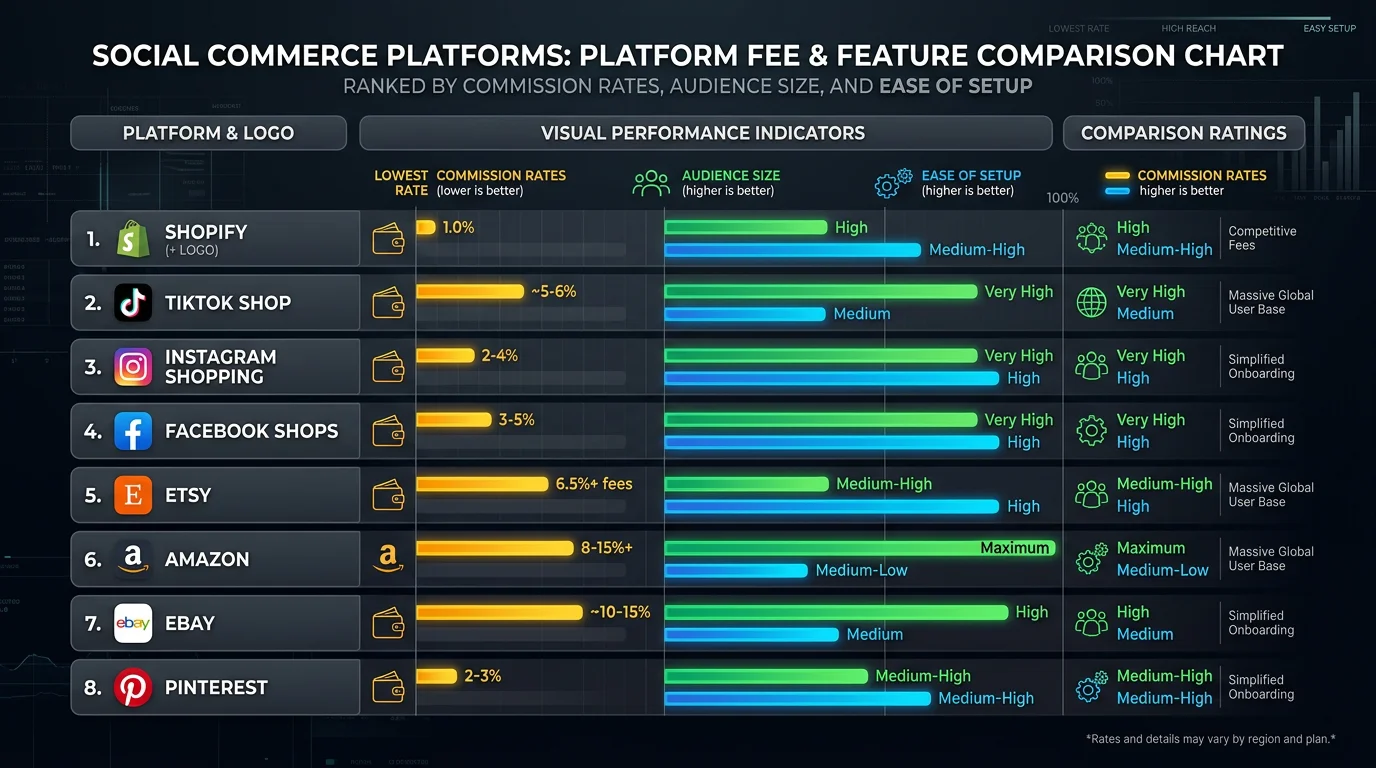
Platform Comparison: Fees, Audience, and Video Integration
Here's how all seven TikTok Shop alternatives compare side by side on the factors that matter most to product sellers:
| Platform | Selling Fees | Monthly Audience | Video Integration | Ease of Setup | Best Fit |
|---|---|---|---|---|---|
| TikTok Shop | 2–8% referral + payment processing | 1.5B | Native (TikTok videos) | Medium | Impulse buys, young audience |
| Instagram Shopping | No platform fee + payment processing | 2B | Native (Reels, Stories) | Easy | Visual products, 25–44 |
| YouTube Shopping | No platform fee + payment processing | 2.7B | Native (Shorts, videos) | Medium | Evergreen content, demonstrations |
| Shopify | 0.5–2% transaction + payment processing | Own traffic | Via social integrations | Medium–Hard | Brand builders, high volume |
| Amazon Live | 6–17% referral fee | 200M+ Prime | Live video only | Medium | Physical products, Prime buyers |
| Pinterest Shopping | No platform fee | 500M | Video pins (limited) | Easy | Visual/aspirational products |
| Facebook Shops | No platform fee + payment processing | 3B | Native (Reels, Stories) | Easy | 35–65 demographic |
| Etsy | $0.20 listing + 6.5% transaction | 90M buyers | None (listing photos) | Very Easy | Handmade, personalized, unique |
How to Drive Traffic to Your Alternative Store With Short-Form Video
Switching platforms solves the ban and fee problem — but it doesn't automatically replace the discovery engine that TikTok gave you. TikTok's algorithm is remarkably good at surfacing product videos to buyers who don't yet know they want what you're selling. To replicate that discovery effect on alternative platforms, you need a consistent short-form video strategy.
The challenge most sellers run into is bandwidth. Posting consistently to YouTube Shorts, Instagram Reels, and TikTok simultaneously — while also running a store — quickly becomes a full-time job. This is exactly where automated video tools become essential.
FlowShorts is an AI-powered faceless video generator that creates short-form product and niche videos and auto-posts them to YouTube Shorts, Instagram Reels, and TikTok on a set schedule — without you having to film, edit, or manually upload anything.
Here's how the workflow looks for a product seller:
- Pick your niche or topic: FlowShorts generates content around your product category — whether that's home decor, fitness equipment, tech gadgets, or beauty products. The AI selects topics with high viewer interest and creates scripts, voiceover, visuals, and captions automatically.
- Connect your accounts once: Link your YouTube, Instagram, and TikTok accounts in a single setup. FlowShorts handles cross-posting to all three platforms on your schedule — so you build an audience everywhere simultaneously instead of choosing one platform to bet on.
- Add your product CTA: Each video can include a link in bio pointing to your Shopify store, Instagram Shop, or wherever you're selling. Consistent video output builds the audience; the CTA converts them.
Plans start at $19/month for 8 videos (Starter), $39/month for 30 videos (Creator), or $69/month for 60 videos (Pro). For a product seller who needs to stay visible across multiple platforms while the TikTok situation evolves, this kind of automated multi-platform publishing is a meaningful competitive advantage.
If you're also managing your posting schedule across platforms, see our guide on how to schedule TikTok videos for tips on timing your content for maximum reach. And if you're evaluating other tools in your stack, our breakdown of whether CapCut is banned covers another platform-risk situation worth understanding.
Start Auto-Posting Product Videos FreeFrequently Asked Questions
What is the best alternative to TikTok Shop?
The best TikTok Shop alternative depends on what you're selling and who you're selling to. For visual products targeting a 25–44 audience, Instagram Shopping is the closest like-for-like replacement — it supports product tagging in Reels and native in-app checkout. For long-term brand building and discovery that compounds over time, YouTube Shopping is the strongest option because content ranks in search and drives traffic for months or years. For sellers who want to own their customer relationship entirely and not be dependent on any single platform, Shopify is the right foundation.
Can I sell on Instagram instead of TikTok?
Yes — Instagram Shopping is a fully functional TikTok Shop alternative. You can create an Instagram Shop, upload your product catalog, and tag products directly in Reels, Stories, and posts. In most countries, buyers can complete a purchase inside the Instagram app without visiting an external site. Instagram also doesn't charge a platform selling fee (as of 2026), so you keep more of each sale compared to TikTok Shop's 2–8% referral fee. The main difference is the audience: Instagram skews slightly older and leans more female than TikTok's core demographic.
What happens to TikTok Shop if TikTok is banned?
If TikTok is banned in the US, TikTok Shop would become inaccessible to American buyers — immediately halting all US-based sales. Sellers would lose access to their storefronts, product listings, and sales history without notice. There is no export or migration path to another platform, meaning any revenue streams built exclusively on TikTok Shop would disappear along with the app. This is exactly why diversifying to at least one alternative platform — particularly one you own, like Shopify — is strongly recommended regardless of how the ban situation resolves. See our full breakdown of the TikTok ban timeline for current status.
Is YouTube Shopping better than TikTok Shop?
YouTube Shopping has several meaningful advantages over TikTok Shop for serious product sellers. First, there is no platform selling fee — you keep more of every sale. Second, YouTube content is evergreen: a product video or Short can rank in search and drive sales for months or years, whereas TikTok content typically dies after 72 hours. Third, YouTube's audience of 2.7 billion monthly users is larger than TikTok's 1.5 billion. The main trade-off is that TikTok's discovery algorithm is more aggressive about surfacing new content to new viewers — making it easier to go viral from a standing start. For sustained, long-term product sales, YouTube Shopping is the stronger platform.
How do I move my TikTok Shop to another platform?
TikTok Shop does not have a native export or migration tool, so moving to another platform requires manual work. Start by exporting your product catalog from TikTok Shop (you can download product data as a CSV from the Seller Center). Then choose your destination platform — Shopify is the most flexible because it connects to Instagram, YouTube, Pinterest, and Facebook simultaneously. Upload your product catalog to Shopify, set up your storefront, then connect Shopify's social integrations to activate Shopping on each platform. For driving traffic to your new store, set up short-form video content on YouTube Shorts and Instagram Reels to replace the discovery you were getting from TikTok's algorithm.
The Bottom Line on TikTok Shop Alternatives
TikTok Shop built a genuinely powerful social commerce model — but the platform uncertainty, commission fees, and account instability make it a risky place to concentrate your entire product business. The good news: social commerce has matured dramatically across every major platform, and the alternatives are no longer compromises.
Instagram Shopping and YouTube Shopping are the closest replacements for video-native product selling. Shopify is the right foundation if you're serious about owning your brand long-term. Amazon Live, Pinterest Shopping, Facebook Shops, and Etsy each serve specific product categories and audience demographics where they outperform TikTok Shop entirely.
The common thread across all of them: consistent short-form video content drives the traffic that converts to sales. If you want to maintain visibility across YouTube Shorts, Instagram Reels, and TikTok simultaneously — without the manual grind of creating and uploading everything yourself — FlowShorts automates the entire process for as little as $19/month.
Try FlowShorts Free — Auto-Post to Every Platform