How to Grow YouTube Channel Fast: AI and SEO for Rapid Growth
Discover how to grow youtube channel fast with AI tools and proven SEO strategies to boost Shorts, automate content, and monetize quickly.
FlowShorts Team

Growing a YouTube channel comes down to three things: getting your videos in front of new people (discovery), keeping them watching (retention), and giving them a reason to come back (consistency). Shorts accelerate discovery. SEO makes your content findable. A posting schedule keeps the algorithm feeding you impressions.
This guide covers the tactics that move the needle fastest: a Shorts-first strategy, YouTube SEO fundamentals, posting cadence, monetization milestones, and where automation fits in.
Why Shorts Are the Fastest Discovery Tool
The Shorts algorithm doesn't weight subscriber count heavily. It evaluates each video independently based on swipe-through rate and watch-through rate. A channel with zero subscribers can get significant reach if a Short holds attention.
This makes Shorts the most efficient way to put your channel in front of new viewers. Each Short acts as a standalone audition — the algorithm serves it to a sample audience, measures engagement, and decides whether to push it wider.

Shorts vs. Long-Form: When to Use Each
| Factor | Shorts | Long-Form |
|---|---|---|
| Discovery speed | Fast. Algorithm pushes to non-subscribers immediately. | Slower. Relies on search, browse, and suggested videos. |
| Production effort | Low. Can be made on a phone in minutes. | High. Requires scripting, filming, editing. |
| Posting frequency | Daily or multiple times per day. | Weekly or bi-weekly. |
| Feedback loop | Hours. You know quickly if a topic or hook works. | Weeks. Meaningful data takes longer to accumulate. |
| Revenue per view | Lower RPM, but much higher view volume potential. | Higher RPM, but harder to scale views. |
| Best for | Subscriber acquisition, testing topics, building momentum. | Deeper engagement, higher watch time, mid-roll ads. |
The most effective approach combines both: Shorts bring in new subscribers, and long-form content gives them a reason to stay. Use Shorts to test topics cheaply — if a Short performs well, expand that topic into a long-form video.
Posting Cadence
- Shorts: 1-3 per day. The algorithm rewards frequency, and each post is another chance to reach new viewers.
- Long-form: 1-2 per week. These are your anchor content — the videos your Shorts funnel viewers toward.
Consistency matters more than volume. Three Shorts every day is more effective than twenty in one day followed by silence. The algorithm tracks channel activity patterns and rewards sustained output. If you're new to the format, see our guide on how to post YouTube Shorts.
YouTube SEO: Titles, Thumbnails, and Descriptions

YouTube is the second-largest search engine. SEO determines whether your videos show up when people search for your topics.
Titles
Your title needs to contain the keywords people search for and create a reason to click. A few guidelines:
Let AI Handle Your Posting Schedule
FlowShorts auto-posts videos at the optimal time to YouTube Shorts, TikTok & Instagram Reels.
Set Up Auto-Posting →- Front-load your keyword. "How to Bake Sourdough at Home" beats "My Amazing Journey Into Sourdough Baking."
- Stay under 60 characters. Longer titles get truncated on mobile.
- Be specific. "5 Common Gardening Mistakes Killing Your Plants" outperforms "Gardening Tips."
Numbers, questions, and specific outcomes tend to get higher click-through rates than generic descriptions.
Thumbnails
Your thumbnail is the biggest single factor in click-through rate. Design at 1280x720 pixels with:
- High-contrast colors that stand out against YouTube's white background
- An expressive face or clear visual that hints at the video's content
- Bold text limited to 3-4 words (readable at phone size)
Title and thumbnail should work as a pair. The title makes a promise; the thumbnail provides visual proof. If your title says "Baking the Perfect Sourdough," the thumbnail should show a gorgeous loaf, not a bag of flour.
Descriptions
The first 100-150 characters appear in search results. Write a clear summary with your main keyword. Below the fold, add:
- A detailed explanation of what the video covers
- Timestamps (these create clickable chapters)
- Links to related videos, your website, and social profiles
- Secondary keywords woven in naturally
Tags
Tags provide additional categorization signals. Use 5-10 relevant tags mixing broad terms ("fitness") with specific phrases ("at-home HIIT workout for beginners"). For keyword ideas, try our YouTube tags generator.
Finding Your Best Posting Times
YouTube Analytics tells you exactly when your viewers are active. Use this data instead of guessing.

- Open YouTube Studio.
- Click Analytics in the left menu.
- Go to the Audience tab.
- Find the "When your viewers are on YouTube" chart.
Schedule uploads about an hour before peak activity. This gives YouTube time to process and index the video so it's ready to distribute when your audience starts scrolling.
If your channel is new and lacks audience data, start with weekday afternoons (12-4 PM in your target timezone) and adjust as analytics accumulate.
Let AI Handle Your Posting Schedule
FlowShorts auto-posts videos at the optimal time to YouTube Shorts, TikTok & Instagram Reels.
Set Up Auto-Posting →Monetization Milestones
The YouTube Partner Program (YPP) has two paths to eligibility:
| Path | Requirements | What It Unlocks |
|---|---|---|
| Long-form path | 1,000 subscribers + 4,000 watch hours in past 12 months | Ad revenue, channel memberships, Super Chat |
| Shorts path | 1,000 subscribers + 10 million Shorts views in past 90 days | Shorts ad revenue sharing |
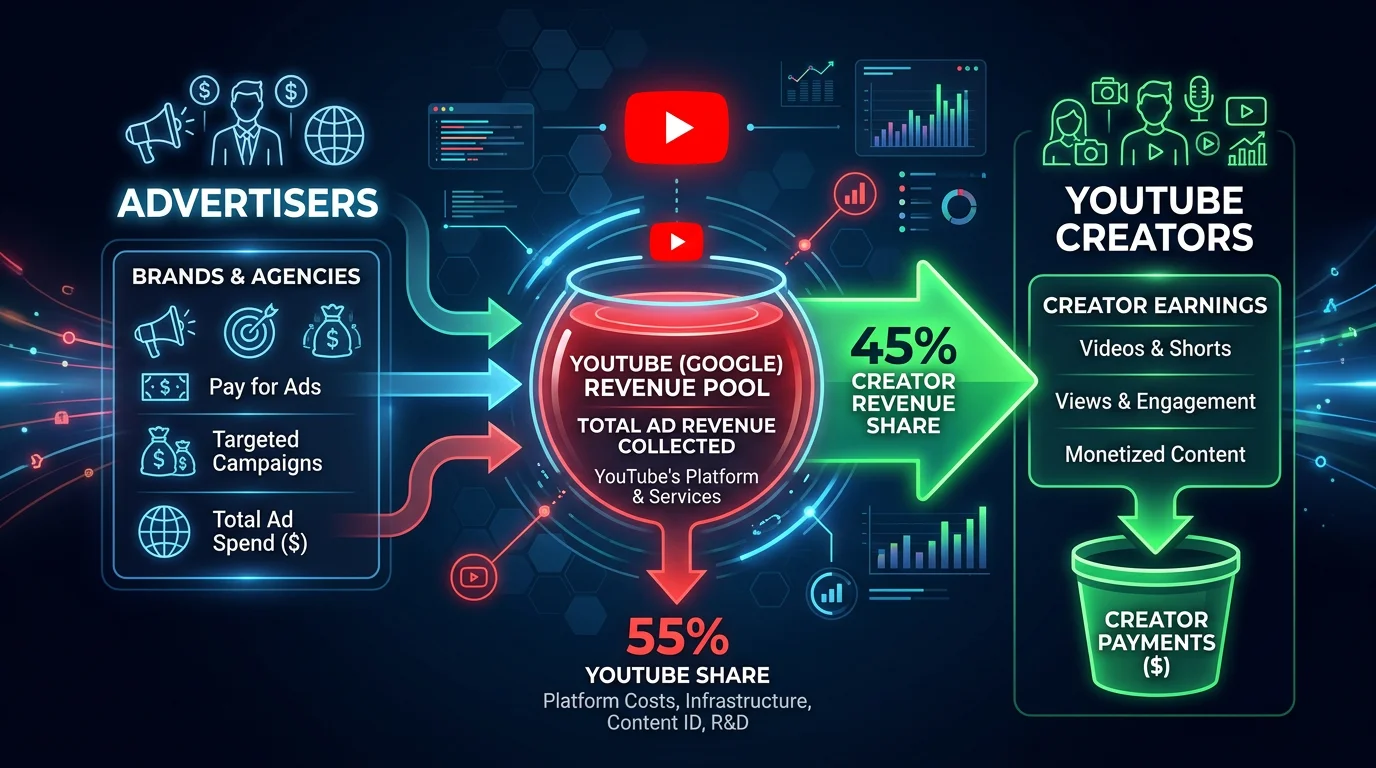
Shorts ad revenue works on a revenue-sharing model: ads run between Shorts in the feed, and creators earn a share based on their proportion of total Shorts views. The per-view rate is lower than long-form mid-roll ads, but the view volume can be significantly higher.
A practical approach: use Shorts to hit the subscriber threshold quickly, then build watch hours through long-form content. For more detail on the revenue side, see our guide on how to monetize YouTube Shorts.
Scaling with Automation
The hardest part of a Shorts-first strategy is maintaining daily output. For creators running faceless channels in repeatable niches (finance tips, history facts, motivational content), AI video platforms like FlowShorts can generate scripts, visuals, voiceover, and captions, then publish on your schedule. This is most useful when the format is consistent and the value is in the information, not the creator's personality on camera.
For a deeper look at this approach, see our guides on AI faceless video generators and how to automate social media posts.
Common Questions
Can You Grow a Channel with Just Shorts?
Yes. Shorts are the fastest discovery tool on YouTube right now. Many channels have built large subscriber bases primarily through Shorts, then introduced long-form content to an audience that was already engaged. The strategy works best in niches where short, information-dense content is the norm (facts, tips, tutorials).
How Many Shorts Should I Post Per Day?
1-3 per day is the range most growth-focused creators target. Quality matters more than raw quantity — three well-crafted Shorts per day outperform twenty low-effort ones followed by a week of silence. The algorithm rewards sustained, consistent output.
Will YouTube Demonetize AI-Generated Faceless Videos?
Not if the content provides genuine value. YouTube's policies target low-effort, repetitive, or spammy content. AI-generated videos with original scripts, relevant visuals, and useful information are treated the same as any other content. Focus on whether the video is worth watching, regardless of how it was made.
What's the Fastest Way to Get 1,000 Subscribers?
Post Shorts daily in a specific niche. Each Short is a standalone audition — the algorithm shows it to people interested in that topic regardless of your subscriber count. Consistent daily posting in a focused niche builds subscribers faster than sporadic posting across multiple topics.
Related Guides
- How to Get More Views on YouTube Shorts
- How to Monetize YouTube Shorts
- Faceless YouTube Channel Ideas
- How to Write a Script for a YouTube Video
Start by niche: How to Start a YouTube Channel by Niche — step-by-step guides for 25+ niches.